Blog · Apr 14, 2026 · 11 min read
Understanding Bitcoin Transaction Anonymity: How Private Are Your Crypto Transactions?
Understanding Bitcoin Transaction Anonymity: How Private Are Your Crypto Transactions?
Bitcoin, the world's first decentralized cryptocurrency, has revolutionized the financial landscape since its inception in 2009. While it offers unparalleled transparency through its public ledger, bitcoin transaction anonymity remains a topic of intense debate among users, regulators, and privacy advocates. Many newcomers to the crypto space mistakenly believe that Bitcoin transactions are entirely anonymous, but the reality is far more nuanced.
In this comprehensive guide, we'll explore the intricacies of bitcoin transaction anonymity, examining how Bitcoin's blockchain works, the tools available to enhance privacy, and the limitations that even the most sophisticated privacy techniques cannot overcome. Whether you're a seasoned crypto investor or just beginning your journey into digital currencies, understanding the nuances of bitcoin transaction anonymity is crucial for protecting your financial privacy in an increasingly transparent digital world.
The Myth of Bitcoin Anonymity: Why Bitcoin Isn't Fully Anonymous
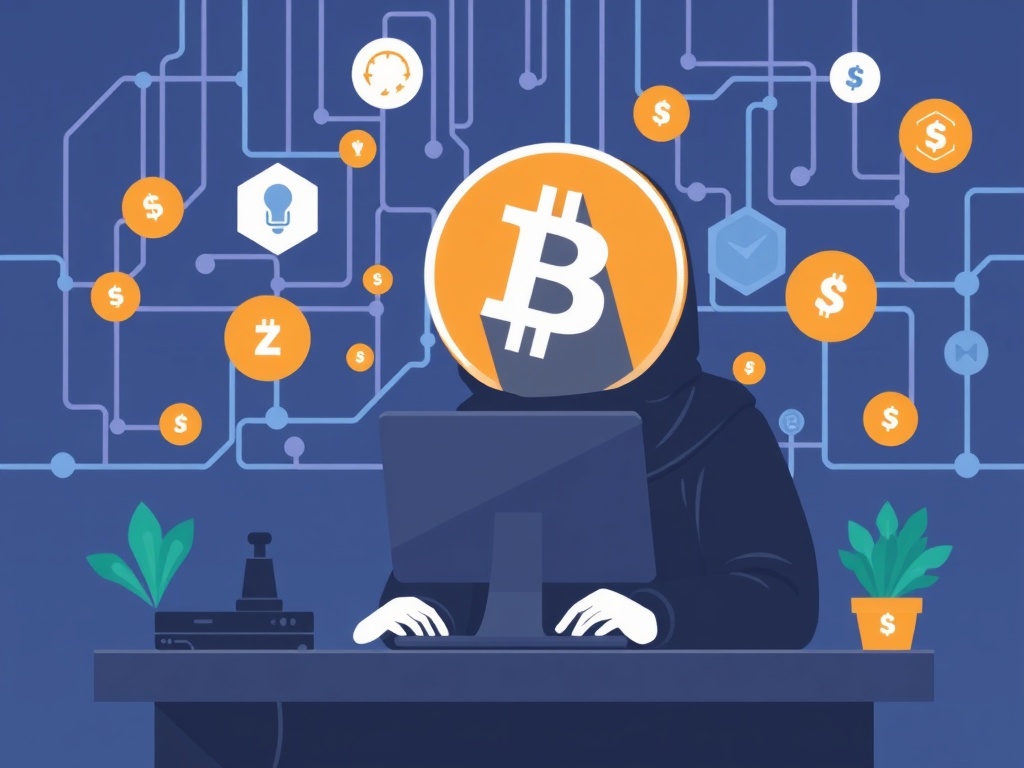
One of the most persistent misconceptions about Bitcoin is that it provides complete anonymity. This myth stems from Bitcoin's pseudonymous nature, where transactions are recorded on a public ledger using cryptographic addresses rather than real-world identities. However, this pseudonymity does not equate to true anonymity.
How Bitcoin's Public Ledger Works
Bitcoin operates on a decentralized public ledger called the blockchain, where every transaction is permanently recorded and visible to anyone with internet access. Each transaction contains:
- Sender's address (public key)
- Receiver's address (public key)
- Transaction amount
- Timestamp
- Transaction ID
While these addresses don't directly reveal the identities of the parties involved, they can be linked to real-world identities through various means, making bitcoin transaction anonymity more complex than many assume.
The Traceability of Bitcoin Transactions
Every Bitcoin transaction leaves a digital footprint that can be analyzed to uncover patterns and connections between addresses. Sophisticated blockchain analysis tools can:
- Identify when multiple addresses belong to the same wallet
- Track the flow of funds between addresses
- Associate Bitcoin addresses with IP addresses or other identifying information
- Link transactions to known exchanges or services
These capabilities mean that while Bitcoin doesn't reveal identities directly, bitcoin transaction anonymity can be compromised through careful analysis of transaction patterns and blockchain data.
Real-World Privacy Risks: When Bitcoin Transactions Aren't Anonymous
The illusion of anonymity in Bitcoin transactions can lead to serious real-world consequences. Several high-profile cases have demonstrated how law enforcement agencies and blockchain analysis firms can deanonymize Bitcoin users, exposing them to financial risks and legal repercussions.
Case Studies of Bitcoin De-Anonymization
One of the most famous examples involved the takedown of the Silk Road marketplace in 2013. While Silk Road operators believed they were using Bitcoin for anonymous transactions, the FBI was able to trace payments back to the marketplace's Bitcoin addresses by analyzing transaction patterns and linking them to known exchange accounts.
Another notable case involved the Colonial Pipeline ransomware attack in 2021, where hackers demanded payment in Bitcoin. Despite their attempts to obscure the transaction trail, law enforcement was able to track the ransom payments through the blockchain and eventually recover a significant portion of the funds.
Exchange Requirements and KYC/AML Regulations
Most reputable cryptocurrency exchanges now implement Know Your Customer (KYC) and Anti-Money Laundering (AML) regulations, which require users to verify their identities before trading. This means that:
- When you deposit Bitcoin to an exchange, your identity becomes linked to your Bitcoin addresses
- Withdrawing Bitcoin from an exchange creates a direct link between your identity and the receiving address
- Even if you use a new address, the exchange can trace the origin of your funds
These regulations significantly reduce bitcoin transaction anonymity, as exchanges serve as a bridge between your real-world identity and your Bitcoin transactions.
Enhancing Bitcoin Transaction Anonymity: Tools and Techniques
While Bitcoin's inherent design doesn't provide complete anonymity, several tools and techniques can significantly enhance bitcoin transaction anonymity. These methods range from simple best practices to sophisticated privacy-enhancing technologies.
Basic Privacy Practices for Bitcoin Users
Even without specialized tools, Bitcoin users can take several steps to improve their privacy:
- Use new addresses for each transaction: Avoid reusing Bitcoin addresses to prevent linking transactions to the same wallet.
- Utilize hierarchical deterministic (HD) wallets: These wallets generate a new address for each transaction automatically, making it harder to track your funds.
- Be mindful of change addresses: Bitcoin transactions often create a "change" address that receives any excess funds. This change address can sometimes reveal information about your wallet's balance.
- Mix your transactions with others: By sending small amounts to multiple addresses and then consolidating them, you can make it harder to trace the origin of your funds.
Advanced Privacy Tools for Bitcoin Users
For those seeking stronger privacy protections, several specialized tools can enhance bitcoin transaction anonymity:
CoinJoin and CoinSwap
CoinJoin is a privacy technique that combines multiple transactions from different users into a single transaction. This makes it difficult to determine which input address corresponds to which output address, effectively breaking the transaction trail. Popular implementations include:
- Wasabi Wallet: A privacy-focused Bitcoin wallet that implements CoinJoin by default
- Samourai Wallet: Another privacy-centric wallet with advanced CoinJoin features
- JoinMarket: An open-source project that allows users to participate in CoinJoin transactions as either a market maker or taker
CoinSwap takes this concept further by allowing users to swap coins with each other without revealing the connection between their inputs and outputs. This creates an additional layer of privacy that's even harder to penetrate.
Lightning Network for Enhanced Privacy
The Lightning Network, a second-layer solution built on top of Bitcoin, offers several privacy advantages:
- Off-chain transactions: Most Lightning Network transactions don't appear on the main Bitcoin blockchain, reducing the public record of your transactions
- Payment routing: Payments are routed through multiple nodes, making it difficult to trace the path of a transaction
- No change addresses: Lightning Network transactions don't create change addresses, reducing the information available to blockchain analysts
While the Lightning Network doesn't make Bitcoin completely anonymous, it significantly enhances bitcoin transaction anonymity for everyday transactions.
Mixers and Tumblers
Bitcoin mixers (also called tumblers) are services that take your Bitcoin, mix it with other users' coins, and return equivalent amounts to new addresses. Popular mixers include:
- ChipMixer: A non-custodial mixer that emphasizes user privacy and security
- Bitcoin Mixer: A simple, user-friendly mixing service
- Wasabi Wallet's built-in mixer: For users who prefer an integrated solution
While mixers can enhance bitcoin transaction anonymity, it's important to note that:
- Some mixers may keep logs or be compromised by authorities
- Mixing large amounts may attract unwanted attention
- The IRS and other agencies have developed techniques to trace mixed coins
Limitations and Risks of Bitcoin Transaction Anonymity Techniques
While the tools and techniques discussed above can significantly enhance bitcoin transaction anonymity, it's crucial to understand their limitations and potential risks. No privacy solution is perfect, and some may introduce new vulnerabilities or trade-offs.
The Persistent Threat of Blockchain Analysis
Even with advanced privacy techniques, blockchain analysis firms continue to develop more sophisticated methods for tracking Bitcoin transactions. These firms use:
- Address clustering: Identifying addresses that belong to the same wallet
- Transaction graph analysis: Mapping the flow of funds between addresses
- Behavioral pattern recognition: Identifying typical spending patterns
- Off-chain data correlation: Linking on-chain transactions with off-chain information
These techniques can sometimes bypass even the most robust privacy measures, making it essential to combine multiple privacy techniques for maximum protection.
Regulatory Challenges and Legal Considerations
The use of privacy-enhancing tools in Bitcoin transactions has become a regulatory gray area in many jurisdictions. Some important considerations include:
- Money laundering concerns: Authorities may view the use of mixers or CoinJoin as suspicious activity
- Exchange policies: Some exchanges may refuse to process funds that have been mixed or come from privacy wallets
- Travel Rule compliance: New regulations require exchanges to share transaction information, potentially compromising privacy
- Tax implications: In some countries, using privacy tools may trigger additional scrutiny from tax authorities
Before using any privacy-enhancing technique, it's important to research the legal landscape in your jurisdiction and consult with a legal professional if necessary.
Security Risks of Privacy Tools
Some privacy-enhancing tools introduce new security risks that users should be aware of:
- Centralized mixers: Some mixers may be run by malicious actors looking to steal funds
- Wallet vulnerabilities: Privacy-focused wallets may have unpatched security flaws
- Phishing risks: Scammers often target users of privacy tools with fake mixer websites
- Transaction delays: Some privacy techniques may result in slower transaction processing
To mitigate these risks, always use reputable, open-source privacy tools and verify their legitimacy before sending funds.
Future of Bitcoin Transaction Anonymity: Emerging Technologies and Trends
The landscape of bitcoin transaction anonymity is constantly evolving, with new technologies and approaches emerging to address the limitations of current privacy solutions. Understanding these developments can help users stay ahead of the curve and make informed decisions about their privacy strategies.
Confidential Transactions and Mimblewimble
While primarily associated with other cryptocurrencies like Monero and Grin, the concepts of confidential transactions and Mimblewimble have influenced Bitcoin privacy discussions. These technologies aim to:
- Hide transaction amounts: Preventing blockchain analysts from seeing how much Bitcoin is being transferred
- Combine transactions: Making it impossible to distinguish between different transactions in a block
- Reduce blockchain bloat: By eliminating unnecessary transaction data
While Bitcoin doesn't natively support these features, some projects are exploring ways to implement similar privacy enhancements within the Bitcoin ecosystem.
Taproot and Privacy Improvements
The Taproot upgrade, activated in November 2021, brought several privacy improvements to Bitcoin:
- Schnorr signatures: Enable more efficient transaction aggregation, making it harder to distinguish between different types of transactions
- MAST (Merkelized Abstract Syntax Trees): Allow for more complex smart contracts while maintaining privacy
- Pay-to-Taproot (P2TR): Improves the privacy of multi-signature transactions
While Taproot doesn't make Bitcoin completely anonymous, it represents an important step toward better bitcoin transaction anonymity by making transactions more indistinguishable from each other.
Decentralized Privacy Solutions
The future of Bitcoin privacy may lie in decentralized solutions that don't rely on trusted third parties. Some promising developments include:
- Dandelion++: A protocol that obscures the origin of transactions by routing them through multiple nodes before broadcasting to the network
- PayJoin: A technique that combines payments from different users into a single transaction, making it harder to trace individual payments
- Atomic swaps: Enable privacy-preserving exchanges between different cryptocurrencies without relying on centralized exchanges
These decentralized approaches offer the potential for stronger privacy guarantees without the risks associated with centralized services.
The Role of Regulation in Shaping Bitcoin Privacy
As governments around the world grapple with the implications of cryptocurrency privacy, regulatory developments will play a significant role in shaping the future of bitcoin transaction anonymity. Some key trends to watch include:
- Increased KYC/AML requirements: More exchanges may be forced to implement stricter identity verification
- Privacy coin bans: Some jurisdictions may attempt to ban privacy-enhancing cryptocurrencies
- Travel Rule compliance: New regulations may require exchanges to share more transaction information
- Privacy tool restrictions: Governments may attempt to limit the use of mixers and other privacy tools
These regulatory developments will likely make it more challenging to maintain strong bitcoin transaction anonymity in the future, making it essential for users to stay informed about legal developments in their jurisdictions.
Best Practices for Maintaining Bitcoin Transaction Anonymity
Given the complexities and risks associated with bitcoin transaction anonymity, implementing a comprehensive privacy strategy is essential for users who value their financial privacy. The following best practices can help maximize your privacy while using Bitcoin.
Wallet Selection and Management
Choosing the right wallet is the first step toward maintaining your privacy:
- Use privacy-focused wallets: Wallets like Wasabi, Samourai, and Electrum with privacy plugins offer advanced privacy features
- Avoid web wallets: Browser-based wallets often have poor privacy practices and may log your activities
- Use hardware wallets for large amounts: Hardware wallets provide better security and can be used with privacy-focused software wallets
- Regularly update your wallet software: Newer versions often include privacy improvements and security patches
Transaction Practices for Enhanced Privacy
How you conduct your transactions can significantly impact your privacy:
- Use CoinJoin when possible: Services like Wasabi Wallet make it easy to mix your coins with others
- Avoid reusing addresses: Generate a new address for each transaction to prevent address reuse analysis
- Be mindful of transaction amounts: Large transactions are easier to trace than small ones
- Use the Lightning Network for small payments: It offers better privacy for everyday transactions
- Consider batching transactions: Combining multiple payments into a single transaction can reduce privacy leaks
Operational Security for Bitcoin Users
Maintaining strong operational security (OpSec) is crucial for protecting your privacy:
- Use a dedicated device for Bitcoin transactions: Separate your Bitcoin activities from your daily computing
- Use a VPN or Tor when accessing Bitcoin services: This helps obscure your IP address and location
- Be cautious with metadata: Avoid posting Bitcoin addresses or transaction IDs publicly
- Use different wallets for different purposes: Separate wallets for savings, spending, and privacy operations
- Regularly rotate your Bitcoin addresses: Even in non-privacy wallets, changing addresses periodically helps
Network-Level Privacy Considerations
Protecting your privacy goes beyond just the Bitcoin protocol:
- Use Tor for Bitcoin node connections: Running a Bitcoin node over Tor can help obscure your IP address
- Consider running your own node: This gives you more control over your transaction broadcasting
- Be aware of timing analysis: Try to avoid broadcasting transactions at predictable times
- Use different networks for different activities: Separate your Bitcoin transactions from other internet activities
Common Mistakes That Compromise Bitcoin Transaction Anonymity
Even experienced Bitcoin users can

Emily Parker
Crypto Investment Advisor
As a certified financial analyst with over a decade of experience in cryptocurrency investment strategies, I often encounter misconceptions about bitcoin transaction anonymity. Many investors mistakenly believe that Bitcoin transactions are entirely anonymous, when in reality, they are pseudonymous. Every transaction is recorded on the public blockchain, meaning that while your identity isn’t directly tied to your wallet address, your transaction history is permanently visible. This transparency is a core feature of Bitcoin’s design, ensuring security and trustlessness, but it also means that with the right tools and analysis, your financial activity can be traced. Privacy-focused investors must understand that anonymity in Bitcoin is not absolute—it requires proactive measures to enhance confidentiality.
For those seeking greater privacy, I recommend leveraging techniques such as coin mixing services, using privacy-focused wallets, and avoiding address reuse. However, even these methods have limitations, as sophisticated blockchain analysis firms can sometimes uncover patterns or link transactions to real-world identities. Institutional investors and high-net-worth individuals should prioritize compliance with regulatory frameworks while still exploring privacy-enhancing strategies. Ultimately, bitcoin transaction anonymity is a nuanced topic—one that balances the need for financial privacy with the inherent transparency of blockchain technology. My advice? Treat Bitcoin as a semi-transparent system and adopt a layered approach to privacy to mitigate risks effectively.