Blog · Apr 20, 2026 · 10 min read
Understanding P2P Crypto Exchange: A Complete Guide to Decentralized Trading in 2024
Understanding P2P Crypto Exchange: A Complete Guide to Decentralized Trading in 2024
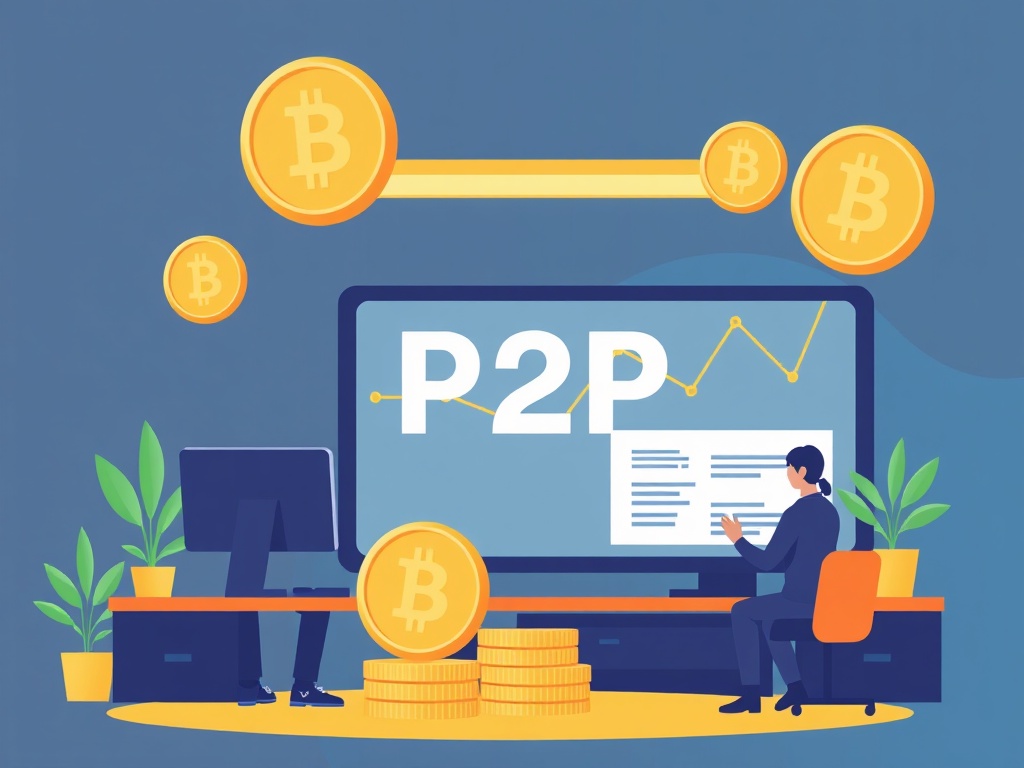
In the rapidly evolving world of cryptocurrency, P2P crypto exchange platforms have emerged as a powerful alternative to traditional centralized exchanges. Unlike conventional systems where a central authority controls transactions, peer-to-peer (P2P) exchanges empower users to trade directly with one another. This model not only enhances privacy and security but also fosters financial inclusivity across global markets.
As regulatory scrutiny increases and users seek greater control over their assets, P2P crypto exchange platforms have gained significant traction. In 2024, these platforms are more sophisticated than ever, offering advanced features, enhanced security protocols, and seamless user experiences. Whether you're a beginner exploring crypto for the first time or an experienced trader looking for alternatives, understanding how a P2P crypto exchange works is essential.
This comprehensive guide explores the fundamentals of P2P crypto exchange, its advantages and challenges, top platforms in 2024, and best practices for safe and efficient trading. By the end of this article, you'll have a clear understanding of how decentralized trading can fit into your crypto strategy.
What Is a P2P Crypto Exchange and How Does It Work?
The Concept of Peer-to-Peer Trading
A P2P crypto exchange is a digital marketplace where individuals can buy and sell cryptocurrencies directly with one another without the involvement of a central intermediary. Instead of relying on a single platform to match buyers and sellers, these exchanges use automated systems—often blockchain-based smart contracts or escrow services—to facilitate secure and transparent transactions.
The core principle behind a P2P crypto exchange is decentralization. This means no single entity controls the flow of funds or user data. Instead, transactions are executed through a network of peers, making the system more resilient to censorship, hacking, and regulatory interference. This model is particularly popular in regions with strict capital controls or limited access to traditional banking services.
How a P2P Crypto Exchange Operates
The operation of a P2P crypto exchange can be broken down into several key steps:
- User Registration and Verification: Users create accounts on the platform and undergo identity verification (KYC) to comply with local regulations and prevent fraud.
- Advertisement Posting: Sellers or buyers create listings specifying the amount, price, payment method, and preferred currency for the trade.
- Trade Matching: The platform uses algorithms to match compatible buyers and sellers based on their criteria.
- Escrow Protection: Once a trade is initiated, the cryptocurrency is held in an escrow account managed by the platform until the transaction is completed.
- Payment and Release: The buyer sends fiat currency via the agreed method (e.g., bank transfer, mobile money, cash deposit). Upon confirmation of payment, the seller releases the crypto from escrow.
- Completion and Feedback: After the trade is finalized, both parties can leave reviews, building trust within the community.
This escrow-based system is the backbone of any reputable P2P crypto exchange, ensuring that both parties fulfill their obligations before funds are exchanged.
Key Differences Between P2P and Centralized Exchanges
To better understand the value of a P2P crypto exchange, it's helpful to compare it with centralized exchanges (CEXs) like Binance or Coinbase:
| Feature | P2P Crypto Exchange | Centralized Exchange (CEX) |
|---|---|---|
| Control | User-controlled (decentralized) | Platform-controlled (centralized) |
| Custody | Users retain control of funds until trade completion | Exchange holds user funds (custodial) |
| Privacy | Higher privacy (no KYC for some platforms) | Lower privacy (mandatory KYC) |
| Fees | Lower fees (no withdrawal fees, but higher spreads possible) | Higher fees (trading, withdrawal, deposit) |
| Speed | Slower (depends on payment method and user response) | Faster (instant order matching) |
While CEXs offer speed and liquidity, a P2P crypto exchange provides autonomy, privacy, and access to global markets—especially in underbanked regions.
Advantages of Using a P2P Crypto Exchange
Enhanced Privacy and Anonymity
One of the most compelling reasons users turn to a P2P crypto exchange is privacy. Unlike centralized platforms that require full identity verification (KYC), many P2P exchanges allow users to trade with minimal personal information. While some platforms do enforce KYC to comply with regulations, the level of data exposure is typically lower than on CEXs.
For individuals in countries with strict financial surveillance or those concerned about data breaches, a P2P crypto exchange offers a safer alternative. Transactions are conducted directly between peers, reducing the risk of large-scale data exposure that plagues centralized databases.
Access to Global Markets and Local Currencies
A P2P crypto exchange breaks down geographical barriers. Users can trade cryptocurrencies using local payment methods such as bank transfers, mobile money, cash deposits, or even gift cards. This is particularly valuable in regions where access to international banking is limited or where fiat-to-crypto on-ramps are scarce.
For example, in Nigeria, where the naira has faced significant devaluation, many citizens use a P2P crypto exchange to buy USDT or Bitcoin using local payment apps like Flutterwave or bank transfers. This allows them to preserve value and participate in the global digital economy.
Lower Transaction Fees and No Withdrawal Limits
Centralized exchanges often charge fees for deposits, withdrawals, and trading. In contrast, a P2P crypto exchange typically charges minimal platform fees—sometimes as low as 0.1% per trade. More importantly, users avoid withdrawal fees since the crypto remains in their personal wallet throughout the process.
Additionally, many P2P platforms do not impose withdrawal limits, making them ideal for large transactions that might trigger scrutiny on centralized platforms.
Reduced Risk of Exchange Hacks and Downtime
Centralized exchanges are prime targets for cyberattacks due to the large amounts of funds they hold in custody. High-profile breaches, such as the Mt. Gox or FTX collapses, have underscored the risks of storing assets on centralized platforms.
With a P2P crypto exchange, users retain control of their funds until the trade is completed. The platform acts only as an escrow service, reducing the risk of large-scale theft. Even if the platform is compromised, user funds remain secure in escrow until the transaction is finalized.
Support for Unbanked and Underbanked Populations
According to the World Bank, nearly 1.7 billion adults remain unbanked. A P2P crypto exchange provides a lifeline by enabling financial participation through mobile phones and local payment networks. Users can trade crypto using airtime vouchers, cash deposits, or peer-to-peer transfers—methods already familiar to millions worldwide.
This inclusivity aligns with the original vision of cryptocurrency: financial freedom for all, regardless of location or socioeconomic status.
Challenges and Risks of P2P Crypto Exchange Platforms
Security Risks and Scams
While a P2P crypto exchange reduces some risks, it introduces others—particularly the risk of scams and fraud. Since transactions occur directly between users, there's no central authority to reverse fraudulent transactions or mediate disputes.
Common scams include:
- Fake payment confirmations: Buyers send fake screenshots to trick sellers into releasing crypto.
- Chargebacks: Buyers initiate chargebacks after receiving crypto, especially with credit card payments.
- Non-payment: Buyers disappear after the seller releases crypto from escrow.
- Impersonation: Scammers pose as support staff to extract login credentials or private keys.
To mitigate these risks, users should always verify counterparties, use platforms with strong escrow systems, and avoid trading outside the platform's built-in chat or dispute resolution tools.
Liquidity and Price Volatility
Unlike centralized exchanges with high liquidity, a P2P crypto exchange may have lower trading volumes, especially for less popular cryptocurrencies. This can lead to wider bid-ask spreads and slower trade execution.
Additionally, prices on P2P platforms can vary significantly between regions due to local demand, inflation, and currency fluctuations. For example, Bitcoin may trade at a premium in countries with capital controls, making it more expensive to buy via a P2P crypto exchange.
Regulatory Uncertainty and Compliance Issues
While decentralization is a core feature of a P2P crypto exchange, regulators worldwide are increasingly scrutinizing these platforms. Some jurisdictions classify P2P trading as a money service business (MSB), requiring licenses and KYC compliance.
For instance, the U.S. Financial Crimes Enforcement Network (FinCEN) has stated that P2P platforms may be subject to anti-money laundering (AML) regulations. Similarly, the European Union's MiCA regulation includes provisions that could apply to P2P services.
Users should be aware of local laws and choose platforms that comply with regional regulations to avoid legal complications.
Limited Customer Support and Dispute Resolution
Centralized exchanges often provide 24/7 customer support and insurance funds to protect users. In contrast, a P2P crypto exchange relies on community-driven dispute resolution, which can be slow and inconsistent.
If a trade goes wrong—due to a scam, miscommunication, or technical error—the user must file a dispute through the platform's support system. Resolution times can range from hours to weeks, depending on the platform's policies and the complexity of the case.
Choosing a reputable P2P crypto exchange with a strong dispute resolution team and positive user reviews is crucial to minimizing these risks.
Top P2P Crypto Exchange Platforms in 2024
Binance P2P: The Market Leader
Binance, the world's largest centralized exchange by trading volume, also operates a robust P2P crypto exchange platform. Launched in 2019, Binance P2P supports over 700 payment methods across 150+ fiat currencies and 100+ cryptocurrencies.
Key features include:
- Zero transaction fees for buyers and sellers.
- Escrow protection for all trades.
- Integration with Binance's main exchange for seamless conversion.
- Strong KYC and compliance measures.
- High liquidity and fast trade matching.
Binance P2P is particularly popular in Asia, Africa, and Latin America, where users rely on local payment methods like GCash (Philippines), M-Pesa (Kenya), and Pix (Brazil).
Bybit P2P: Fast and User-Friendly
Bybit, known for its derivatives trading, launched its P2P crypto exchange in 2021 and has since gained a strong following. The platform supports Bitcoin, USDT, USDC, and ETH, with a focus on speed and security.
Notable features include:
- Instant order matching with low latency.
- Multiple payment options, including bank transfers and e-wallets.
- 24/7 customer support and dispute resolution.
- Competitive exchange rates with minimal spreads.
Bybit P2P is ideal for users who prioritize speed and reliability, especially in high-demand markets.
Huobi P2P: Strong in Asia and Beyond
Huobi Global, one of the oldest crypto exchanges, offers a comprehensive P2P crypto exchange platform with support for multiple languages and currencies. The platform is widely used in China, Southeast Asia, and the Middle East.
Key advantages include:
- Support for over 100 local currencies.
- Integration with Huobi's OTC desk for large trades.
- Strong escrow system with real-time transaction tracking.
- Competitive fee structure and high liquidity.
Huobi P2P is especially popular among users in Vietnam, Indonesia, and Turkey, where local payment methods are widely accepted.
LocalBitcoins: The Pioneer (Now Rebranded as Paxful)
LocalBitcoins, once the most popular P2P crypto exchange, rebranded as Paxful in 2023 following a shift in strategy. Paxful now supports Bitcoin and Tether (USDT) trading with a focus on privacy and accessibility.
Notable features include:
- No mandatory KYC for small trades (varies by region).
- Support for over 300 payment methods, including gift cards and cash deposits.
- Built-in chat and dispute resolution system.
- Strong community reputation and user reviews.
Paxful remains a top choice for users seeking anonymity and flexibility, particularly in Africa and Latin America.
OKX P2P: Growing Global Presence
OKX, a major global exchange, has expanded its P2P crypto exchange offerings with support for multiple cryptocurrencies and fiat currencies. The platform is known for its intuitive interface and strong security measures.
Key highlights include:
- Support for 50+ fiat currencies and 10+ cryptocurrencies.
- Integration with OKX's main exchange for seamless trading.
- Advanced escrow system with AI-powered fraud detection.
- Competitive rates and low fees.
OKX P2P is gaining traction in Europe, the Middle East, and Southeast Asia, offering a reliable alternative to centralized platforms.
How to Safely Use a P2P Crypto Exchange: Best Practices
Choose a Reputable Platform
Not all P2P crypto exchange platforms are created equal. Before trading, research the platform's reputation, user reviews, and security track record. Look for platforms with:
- Strong escrow systems.
- Positive feedback scores and high trade volumes.
- Transparent
 Emily ParkerCrypto Investment Advisor
The Rise of P2P Crypto Exchanges: A Game-Changer for Investors in 2024
As a certified financial analyst with over a decade of experience in cryptocurrency investment strategies, I’ve seen firsthand how P2P crypto exchanges are reshaping the digital asset landscape. Unlike traditional centralized exchanges, these platforms empower users by facilitating direct transactions between peers, eliminating intermediaries and reducing reliance on third-party custodians. This model not only enhances privacy but also mitigates risks associated with exchange hacks or regulatory crackdowns. For investors seeking autonomy over their assets, P2P exchanges offer a compelling alternative—one that aligns with the core ethos of decentralization that originally drew many to crypto.
However, it’s critical to approach P2P crypto exchanges with a balanced perspective. While they provide unparalleled flexibility and often lower fees, they also introduce unique challenges, such as counterparty risk and liquidity constraints. My advice to investors is to prioritize platforms with robust escrow systems, transparent user ratings, and strong community governance. Additionally, always conduct thorough due diligence on counterparties and use secure wallets for storage. In an era where trust in centralized institutions is waning, P2P exchanges represent a powerful tool—but only when wielded with caution and strategic foresight.