Blog · Apr 17, 2026 · 11 min read
Understanding the Tornado Cash Sanctions: Impact on Privacy, Compliance, and the Crypto Ecosystem
Understanding the Tornado Cash Sanctions: Impact on Privacy, Compliance, and the Crypto Ecosystem
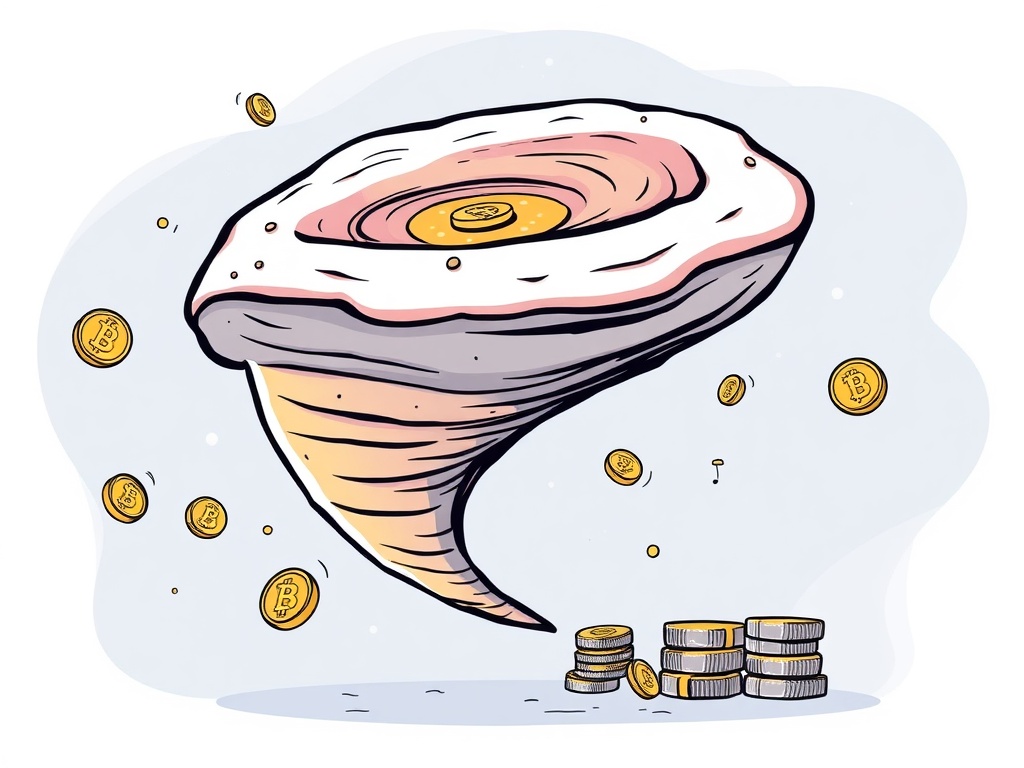
The Tornado Cash sanctions represent one of the most significant regulatory actions in the cryptocurrency space, fundamentally altering how privacy-focused protocols are perceived and treated by global authorities. Imposed by the U.S. Department of the Treasury’s Office of Foreign Assets Control (OFAC) in August 2022, these sanctions targeted Tornado Cash, a decentralized cryptocurrency mixer designed to enhance transaction privacy by obscuring the origin and destination of digital assets. The move sent shockwaves through the blockchain community, raising critical questions about financial privacy, regulatory overreach, and the future of decentralized finance (DeFi).
This article explores the Tornado Cash sanctions in depth, examining their origins, legal implications, impact on users and developers, and the broader consequences for privacy in the crypto ecosystem. We will also analyze the responses from the blockchain community, the challenges faced by privacy advocates, and what the future may hold for tools like Tornado Cash.
---The Origins and Nature of Tornado Cash
What Is Tornado Cash?
Tornado Cash is a non-custodial, decentralized cryptocurrency mixer built on Ethereum and other compatible blockchains. Its primary function is to enhance transaction privacy by breaking the on-chain link between the sender and receiver of funds. When users deposit cryptocurrency into Tornado Cash, they receive a cryptographic note (a "commitment") that can later be used to withdraw the same amount to a different address, effectively severing the transaction trail.
Unlike traditional mixers that rely on centralized servers to shuffle funds, Tornado Cash operates autonomously through smart contracts. This decentralized design makes it resistant to censorship and single points of failure, aligning with the ethos of blockchain technology. However, this same feature also complicates regulatory oversight, as there is no central entity to target or shut down.
How Tornado Cash Works: A Technical Overview
The core mechanism of Tornado Cash relies on zero-knowledge proofs (ZKPs), specifically zk-SNARKs, to ensure that deposits and withdrawals remain unlinkable. Here’s a simplified breakdown of the process:
- Deposit: A user sends a specified amount of cryptocurrency (e.g., ETH or USDC) to a Tornado Cash smart contract. The transaction is recorded on-chain, but the user’s original address is not directly tied to the deposit.
- Commitment: The user receives a secret note (a hash) that represents their deposit. This note is stored off-chain but can be used later to prove ownership without revealing the original address.
- Withdrawal: To retrieve funds, the user submits the note to the smart contract, which verifies its validity using the ZKP. The funds are then sent to a new address chosen by the user, ensuring the transaction trail is broken.
This process ensures that while all transactions are publicly visible on the blockchain, the connection between the sender and receiver remains obscured. For users in jurisdictions with strict financial surveillance, Tornado Cash provides a critical tool for maintaining privacy.
The Rise of Tornado Cash in the Crypto Space
Tornado Cash gained significant traction in the DeFi ecosystem, particularly among users seeking to protect their financial data from prying eyes. Its adoption surged following high-profile hacks and exploits where stolen funds were laundered through mixers. For example, after the Poly Network hack in 2021 and the Ronin Bridge exploit in 2022, Tornado Cash was frequently cited as a tool for obfuscating the movement of illicit funds.
By mid-2022, Tornado Cash was processing hundreds of millions of dollars in monthly transactions, with a substantial portion of its user base consisting of legitimate users seeking privacy rather than criminals. This dual-use nature—where privacy tools can be exploited by bad actors—posed a significant challenge for regulators, ultimately leading to the Tornado Cash sanctions.
---The U.S. Government’s Sanctions Against Tornado Cash
Why Did OFAC Sanction Tornado Cash?
On August 8, 2022, the U.S. Department of the Treasury’s OFAC added Tornado Cash to its Specially Designated Nationals and Blocked Persons (SDN) List. The sanctions were justified on the grounds that Tornado Cash had been used to launder funds for entities and individuals linked to cybercrime, including:
- The Lazarus Group, a North Korean state-sponsored hacking collective responsible for high-profile cyberattacks.
- Hackers involved in the $600 million Ronin Bridge exploit in March 2022.
- Other cybercriminals who exploited Tornado Cash to obscure the origins of stolen funds.
OFAC’s rationale was clear: Tornado Cash, despite its decentralized nature, was facilitating illicit financial activity on a massive scale. The sanctions were intended to disrupt these flows and send a message to the crypto industry about the consequences of enabling financial crime.
Legal and Regulatory Implications of the Sanctions
The Tornado Cash sanctions marked the first time a decentralized protocol was directly targeted by U.S. authorities. This unprecedented action raised several critical legal and regulatory questions:
- Can a Decentralized Protocol Be Sanctioned?
Unlike traditional financial institutions, Tornado Cash has no central authority, no CEO, and no physical headquarters. This decentralized structure complicates enforcement, as there is no single entity to freeze assets or prosecute. OFAC’s decision to sanction the protocol itself—rather than its developers or users—set a controversial precedent.
- Secondary Sanctions and Compliance Risks
OFAC’s sanctions also imposed restrictions on U.S. persons and entities interacting with Tornado Cash. This includes not only direct use of the mixer but also any transactions that might indirectly facilitate its operation (e.g., providing liquidity, hosting infrastructure, or even discussing the tool in public forums). The broad scope of these restrictions created significant compliance challenges for exchanges, developers, and even privacy advocates.
- First Amendment Concerns
The sanctions also sparked debates about free speech and censorship. In October 2022, GitHub suspended the accounts of Tornado Cash’s developers, including Alexey Pertsev, who was later arrested in the Netherlands. Critics argued that targeting developers for creating open-source software violated free speech principles, as code is a form of expression protected under the First Amendment in the U.S.
Global Response to the Tornado Cash Sanctions
The Tornado Cash sanctions did not go unnoticed internationally. Reactions varied widely across jurisdictions:
- European Union: The EU’s Markets in Crypto-Assets Regulation (MiCA) and Transfer of Funds Regulation (TFR) have since introduced stricter AML/CFT requirements for privacy-enhancing tools, though no direct sanctions equivalent to OFAC’s have been imposed.
- South Korea: The country’s financial regulators have taken a cautious approach, monitoring Tornado Cash’s usage while exploring regulatory frameworks for mixers.
- Russia and Other Jurisdictions: Some countries with less stringent financial oversight have continued to use Tornado Cash without facing direct penalties, highlighting the global disparity in crypto regulation.
In the U.S., the sanctions reinforced the government’s stance on crypto compliance, with agencies like the Financial Crimes Enforcement Network (FinCEN) and the Securities and Exchange Commission (SEC) increasing scrutiny on privacy tools and decentralized protocols.
---Impact of the Tornado Cash Sanctions on Users and Developers
Challenges Faced by Tornado Cash Users
The Tornado Cash sanctions had immediate and far-reaching consequences for its users. Some of the most significant impacts included:
- Asset Freezes and Transaction Blocks:
Major cryptocurrency exchanges, including Coinbase, Kraken, and Binance, began blocking transactions associated with Tornado Cash addresses. Users who had previously deposited funds into the mixer found themselves unable to withdraw or interact with their assets without risking legal repercussions.
- Loss of Access to DeFi Services:
Many DeFi protocols require users to pass Know Your Customer (KYC) checks. Since Tornado Cash deposits are untraceable, users who had used the mixer could no longer access compliant services, effectively cutting them off from large portions of the crypto economy.
- Legal Risks for Users:
While OFAC’s sanctions primarily target U.S. persons, the broad language of the restrictions created uncertainty for users worldwide. Some legal experts warned that even non-U.S. users could face secondary sanctions if they were deemed to be facilitating Tornado Cash’s operation.
Developers Under Fire: The Case of Alexey Pertsev
The most high-profile legal case stemming from the Tornado Cash sanctions involved Alexey Pertsev, one of the protocol’s core developers. In August 2022, Pertsev was arrested in the Netherlands and charged with money laundering and facilitating criminal financial activity.
The prosecution argued that Pertsev’s role in developing and maintaining Tornado Cash made him complicit in the illicit activities facilitated by the protocol. His case raised critical questions about the liability of open-source developers, particularly in decentralized systems where there is no clear line of responsibility.
In May 2024, Pertsev was found guilty and sentenced to 54 months in prison, a verdict that sent shockwaves through the crypto community. Critics argued that the ruling set a dangerous precedent, criminalizing the creation of privacy-enhancing software without clear evidence of intent to facilitate crime.
Economic and Market Consequences
The sanctions also had measurable effects on the cryptocurrency market:
- Decline in Tornado Cash Usage:
Following the sanctions, the volume of transactions on Tornado Cash plummeted by over 90% within months. While some users continued to use the tool via alternative methods (e.g., VPNs, decentralized frontends), the overall activity dropped significantly.
- Shift to Alternative Privacy Tools:
Users seeking privacy turned to other mixers, such as Wasabi Wallet (for Bitcoin) and Hopr (a privacy-focused protocol). However, these alternatives often lack the same level of sophistication or decentralization as Tornado Cash.
- Increased Scrutiny on Other Privacy Protocols:
The crackdown on Tornado Cash has led to heightened regulatory pressure on other privacy-enhancing technologies, including Monero (XMR), Zcash (ZEC), and CoinJoin services. Exchanges have delisted or restricted these assets, citing compliance risks.
Broader Implications for Privacy and Decentralization
The Ethical Dilemma: Privacy vs. Compliance
The Tornado Cash sanctions have ignited a fierce debate about the balance between financial privacy and regulatory compliance. On one side, privacy advocates argue that tools like Tornado Cash are essential for protecting users from surveillance, censorship, and financial discrimination. On the other, regulators contend that such tools enable illicit activity and undermine global efforts to combat money laundering and terrorism financing.
This tension is not unique to cryptocurrency. Traditional financial systems also grapple with privacy concerns—cash transactions, for example, offer anonymity but are increasingly restricted in favor of digital tracking. However, the transparent nature of blockchain technology amplifies these concerns, as every transaction is permanently recorded and publicly visible.
Some key arguments in this debate include:
- For Privacy:
- Financial privacy is a fundamental human right, protecting individuals from discrimination, harassment, and targeted attacks.
- Censorship-resistant tools like Tornado Cash are vital for users in authoritarian regimes or high-surveillance environments.
- Regulatory overreach could stifle innovation in decentralized technologies, pushing privacy solutions underground.
- For Compliance:
- Illicit actors exploit privacy tools to launder billions in stolen funds, undermining global financial stability.
- Regulators have a duty to protect citizens from financial crime, even if it means restricting certain technologies.
- Privacy tools can be redesigned to comply with AML/CFT regulations without sacrificing core functionality.
The Future of Privacy in Crypto: Can Compromise Be Achieved?
The Tornado Cash sanctions have forced the crypto industry to confront difficult questions about the future of privacy. Several potential paths forward have emerged:
- Regulated Privacy Solutions:
Some projects are exploring "compliant privacy" models, where transactions remain private but can be audited by authorized entities (e.g., regulators or law enforcement) under specific conditions. Examples include zk-SNARKs with selective disclosure or hybrid privacy protocols that allow for optional transparency.
- Decentralized Identity Solutions:
Integrating decentralized identity (DID) systems with privacy tools could enable users to prove compliance without revealing their full transaction history. For example, a user could prove they are not on a sanctions list without disclosing their actual address.
- Legal Challenges and Precedents:
The outcome of cases like Alexey Pertsev’s trial and ongoing lawsuits against OFAC (e.g., Coin Center v. Yellen) will shape the legal landscape for privacy tools. A favorable ruling for developers or users could set a precedent for protecting open-source software from arbitrary sanctions.
- Shift to Alternative Blockchains:
Some users have migrated to privacy-focused blockchains like Monero or Zcash, which offer stronger default privacy features. However, these networks face their own regulatory challenges, including exchange delistings and institutional resistance.
Lessons for the Crypto Community
The Tornado Cash sanctions serve as a cautionary tale for the cryptocurrency ecosystem. Key takeaways include:
- Regulatory Uncertainty is Here to Stay: The crypto industry must prepare for continued regulatory scrutiny, particularly around privacy tools, mixers, and decentralized protocols.
- Decentralization Has Limits: While decentralized systems resist censorship, they are not immune to regulatory pressure. Developers and users must navigate compliance risks carefully.
- Privacy Advocacy is More Important Than Ever: Organizations like the Electronic Frontier Foundation (EFF), Coin Center, and Privacy International are leading efforts to defend privacy rights in the digital age. Supporting these groups is crucial for maintaining financial freedom.
- Innovation in Compliance: The crypto industry must invest in privacy-preserving compliance tools that satisfy regulators without sacrificing user rights. This could include advanced cryptographic techniques or decentralized compliance protocols.
What’s Next for Tornado Cash and Privacy Tools?
Can Tornado Cash Recover?
As of 2024, Tornado Cash continues to operate, albeit in a diminished capacity. The protocol’s smart contracts remain functional, and users can still interact with them via decentralized frontends or VPNs. However, the sanctions have severely limited its mainstream adoption and usability.
Several factors will determine Tornado Cash’s future:
- Legal Outcomes: If Alexey Pertsev’s appeal succeeds or if OFAC faces legal challenges, the sanctions could be rolled back, allowing Tornado Cash to regain legitimacy.
- Technological Adaptations: The development team could introduce new features to enhance compliance, such as optional transaction tracing or integration with regulatory reporting tools.
- Community Support: A strong, vocal community could push for Tornado Cash’s reintegration into the crypto ecosystem, particularly if regulators recognize the tool’s legitimate use cases.
Emerging Alternatives to Tornado Cash
While Tornado Cash was the most prominent mixer, several alternatives have emerged in its wake:
- Wasabi Wallet (Bitcoin): A privacy-focused Bitcoin wallet
 Robert HayesDeFi & Web3 Analyst
The U.S. Treasury's sanctions against Tornado Cash represent a watershed moment for decentralized finance (DeFi) and the broader Web3 ecosystem. As a researcher deeply embedded in DeFi protocols and Web3 infrastructure, I view these sanctions not merely as a regulatory overreach but as a fundamental challenge to the foundational principles of permissionless innovation. Tornado Cash, a privacy-focused Ethereum mixer, has been a critical tool for users seeking to protect their financial privacy in an era of increasing surveillance. While the Treasury's concerns about illicit finance are valid, the blanket sanctions imposed on the protocol—rather than specific addresses—set a dangerous precedent. This approach risks stifling legitimate use cases, from privacy-conscious individuals to developers building privacy-enhancing technologies, without addressing the root causes of financial crime.
From a practical standpoint, the sanctions have already had chilling effects across the DeFi landscape. Developers are now hesitant to contribute to privacy-focused projects, fearing legal repercussions, while users are left with fewer tools to safeguard their transactions. The case also highlights the tension between decentralized governance and regulatory compliance. Tornado Cash's DAO structure, which allowed for community-driven upgrades, is now paralyzed, demonstrating how sanctions can disrupt even the most decentralized systems. For Web3 to mature, we must advocate for nuanced regulatory frameworks that distinguish between malicious actors and legitimate users. The Tornado Cash sanctions underscore the urgent need for dialogue between innovators and policymakers to ensure that privacy and compliance can coexist in the decentralized future.